
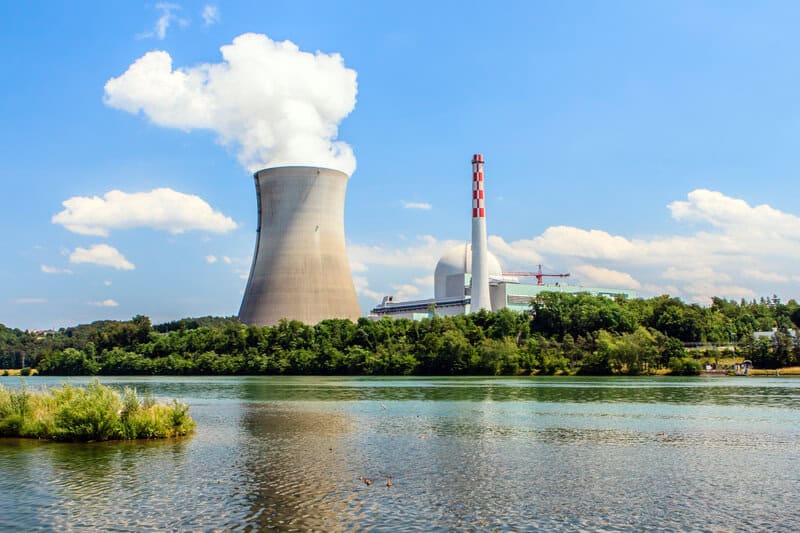
Switzerland’s existing nuclear power plants could remain in operation for up to 80 years, according to a new report by the federal government, which argues that long-term operation is both technically feasible and economically viable.
A memorandum from the Swiss Federal Office of Energy had already concluded in 2024 that extending the lifespan of Swiss reactors beyond 60 years was technically and financially possible. The government now says that further operation over an 80-year period would require investments of between CHF 700m and CHF 1.2bn per plant for upgrades and maintenance. Those costs are expected to be commercially worthwhile. From today’s perspective, a substantial profitability gap appears highly unlikely, the report says.
Should profitability deteriorate unexpectedly, or major investment barriers emerge, the Federal Council says state support could take the form of contracts for difference or targeted investment subsidies.
Switzerland currently operates four nuclear reactors at three sites: Beznau Nuclear Power Plant, Gösgen Nuclear Power Plant and Leibstadt Nuclear Power Plant. Located in northern Switzerland between Basel and Zurich, they remain a cornerstone of the country’s electricity supply. In 2024 nuclear power generated roughly 30% of Swiss electricity.
Exactly when the plants will close remains uncertain. A decision on the future of the Gösgen plant must be taken by 2029, according to Thomas Sieber, chairman of Axpo. Axpo owns the Beznau plant and holds stakes in both Leibstadt and Gösgen. In 2024 the company announced plans to shut Beznau in 2033 after around 60 years of operation.
Political divisions remain sharp
The report fulfils a parliamentary motion submitted by Thierry Burkart, a lawmaker from the pro-business PLR/FDP. The party welcomed the findings, arguing that extending reactor lifetimes would strengthen energy security, support climate goals and ease pressure on electricity consumers, reported SRF.
The centrist Green Liberal Party of Switzerland said it could support longer operating lives under strict conditions: reactors must remain safe and serve only as a temporary bridge until Switzerland achieves a fully renewable electricity supply.
The Green Party of Switzerland rejected the proposal outright. Marionna Schlatter, a Green lawmaker from Zurich, described long-term operation as dangerous and a massive misinvestment, arguing that the money would be better spent expanding renewable energy.
Greenpeace also criticised the idea. In a statement the environmental group warned that key safety components, such as reactor pressure vessels, deteriorate over time and cannot be replaced. Every reactor has an expiration date, it said.
Debate over Switzerland’s energy future
Swiss nuclear plants hold open-ended operating licences and may continue running as long as safety standards are met. The country’s nuclear regulator, the Swiss Federal Nuclear Safety Inspectorate, conducts ongoing oversight.
The Federal Council argues that continued operation of existing reactors, combined with further expansion of renewable energy, could reduce Switzerland’s winter dependence on imported electricity and improve security of supply — in 2023 Switzerland imported nearly 50% of the electricity it consumed. A broader assessment is expected as part of the government’s Energy Perspectives 2060 strategy.
Meanwhile, parliament is debating the government’s counterproposal to the popular initiative “Electricity for all at all times (stop blackouts)”, which seeks to keep the option of building new nuclear power plants open.
More on this:
Government report (in French) – Take a 5 minute French test now
For more stories like this on Switzerland follow us on Facebook and Twitter.