
Close Menu
  • Home
  • Politics
  • Business & Economy
  • Education
  • Environment
  • Immigration
  • Technology
  • Automotive
  • Things To Do
  • More
    • Web Stories
    • Global
    • Press Release
What's On

Swiss food-security initiative criticised as unrealistic

19 June 2026

Childlessness and smaller families driving down fertility in Switzerland

19 June 2026

Why Relationship Capital Matters in Modern Finance: Lessons from Zurich, Monaco, and the New Global Investment Landscape

19 June 2026

Railway near-miss exposes Switzerland’s language challenge

19 June 2026

Swiss vote to restrict civilian-service alternative for young men

14 June 2026
Facebook X (Twitter) Instagram
Web Stories
Switzerland Times
  • Home
  • Politics
  • Business & Economy
  • Education
  • Environment
  • Immigration
  • Technology
  • Automotive
  • Things To Do
  • More
    • Web Stories
    • Global
    • Press Release
Home » Above average number of avalanche victims this winter in Switzerland
Environment

Above average number of avalanche victims this winter in Switzerland

By switzerlandtimes.ch3 April 20262 Mins Read
Above average number of avalanche victims this winter in Switzerland
Share
Facebook Twitter LinkedIn Pinterest Email

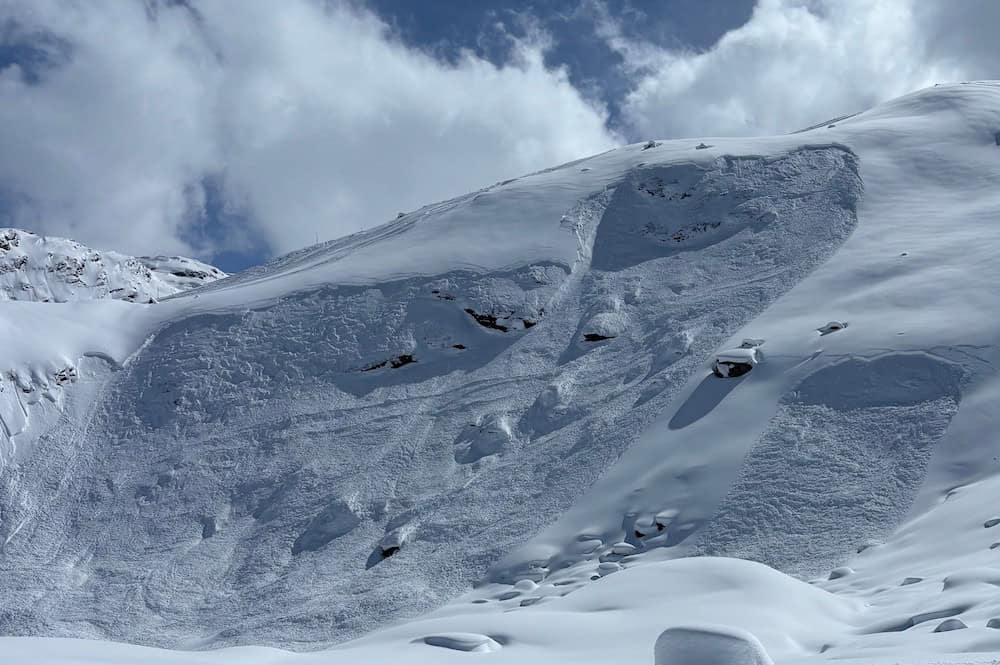
Avalanches swept away more people than usual in the winter of 2025–26, though the death toll remained broadly in line with the average.

A fragile snowpack led to a surge in incidents. By the end of March, 244 people had been caught in 171 avalanches, according to the WSL Institute for Snow and Avalanche Research SLF. Over the past decade the averages were 182 people in 127 incidents. Yet fatalities, at 15, were typical. Thirty-seven people were completely buried. In most of the 13 fatal accidents, avalanches were triggered in weak layers of old snow.

Avalanches involving people were recorded almost daily between January 10th and February 22nd. A final tally will be available only at the end of the hydrological year on September 30th, the institute notes.

The underlying problem was instability. After an early start to winter in late November and early December, dry and sunny weather persisted into January, leaving little snow cover at the turn of the year. Large temperature differences transformed the snowpack, creating weak layers prone to collapse. Such conditions are hard to detect in the field, even for experts, and avalanches released deep in the snowpack tend to be large and dangerous.

The risk peaked in midwinter. From mid-January to mid-February, light but frequent snowfall covered the fragile base, raising the danger across the Alps. The worst-affected regions were Valais, Ticino and Graubünden. Heavy snowfall in mid-February—up to 150cm in parts of Lower Valais—pushed the danger level to the maximum (level 5) on February 17th. A further metre of snow fell in the north between February 18th and 22nd.

Conditions eased in early March before deteriorating again later in the month, particularly on the southern side of the Alps. Many avalanches were subsequently triggered by people, especially in Valais and Graubünden, though none proved fatal. Fresh snowfall in the north at the end of March briefly raised the danger once more.

More on this:
SLF article (in French) – Take a 5 minute French test now

For more stories like this on Switzerland follow us on Facebook and Twitter.

Share. Facebook Twitter Pinterest LinkedIn Tumblr Email

Keep Reading

How climate change is threatening Swiss Alpine huts

Swiss rivers are overheating

The politics of air conditioning in Switzerland

Swiss Rail to expand offer to Italy and France

Swiss nuclear plants could run for further 80 years

Swiss glaciers enter summer with unusually low snow cover

“Snow of May” – Swiss narcissus season in full bloom

How too many livestock keep Switzerland from feeding itself

Swiss commission backs construction of new nuclear power plants

Editors Picks

Swiss food-security initiative criticised as unrealistic

19 June 2026

Childlessness and smaller families driving down fertility in Switzerland

19 June 2026

Why Relationship Capital Matters in Modern Finance: Lessons from Zurich, Monaco, and the New Global Investment Landscape

19 June 2026

Railway near-miss exposes Switzerland’s language challenge

19 June 2026
Latest Posts

Swiss food-security initiative criticised as unrealistic

19 June 2026

Childlessness and smaller families driving down fertility in Switzerland

19 June 2026

Why Relationship Capital Matters in Modern Finance: Lessons from Zurich, Monaco, and the New Global Investment Landscape

19 June 2026
Facebook X (Twitter) Pinterest TikTok Instagram
© 2026 Switzerland Times. All Rights Reserved.
  • Privacy Policy
  • Terms
  • Advertise
  • Contact

Type above and press Enter to search. Press Esc to cancel.