
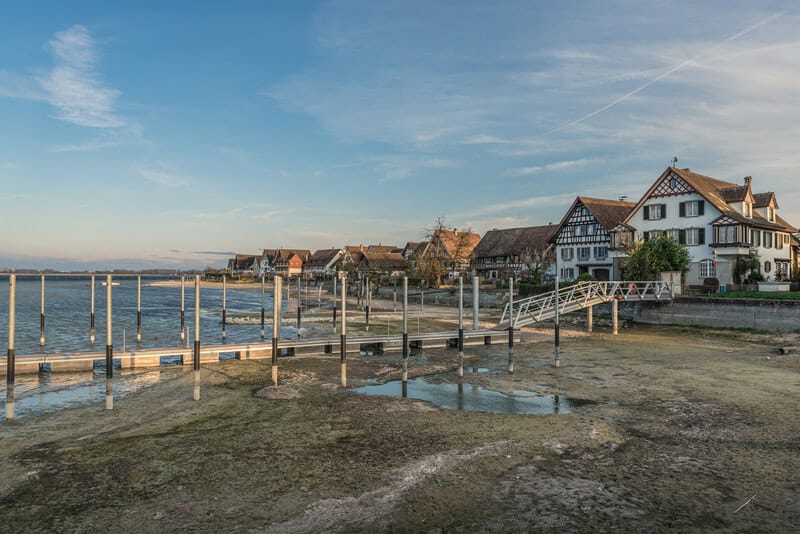
Climate-related risks in Switzerland are rising, driven by intensifying summer droughts and higher temperatures. That is the stark warning from a new report published on Thursday by the Federal Office for the Environment (FOEN), which assesses the evolving threats posed by climate change in the country through to 2060.
Based on scientific literature and consultations with dozens of experts, the report identifies 34 distinct climate risks. Chief among them are those linked to warming temperatures, prolonged dry spells, heavier rainfall, and the disruption of natural ecosystems.
Hotter, drier, riskier
Periods of extreme heat and heatwaves already pose a significant hazard. By 2060, they are expected to become more frequent and severe. At the same time, a growing share of the population—particularly the elderly—will be more vulnerable to such events.
Summer rainfall could decline by as much as 25%, with longer and more persistent droughts affecting agriculture, ecosystems, and the broader economy. Conversely, episodes of intense rainfall are likely to become more frequent, and with increased soil sealing due to urban development, the risk of runoff and flooding will rise accordingly.
Climate impacts will not be distributed equally. Older people, those with chronic illnesses, pregnant women and young children are most at risk from extreme heat. Workers in construction, agriculture and winter tourism are also more exposed. Mountain regions, in particular, face specific challenges: shrinking snow seasons threaten winter tourism, while changing landscapes pose physical and economic risks.
Little upside
Any potential benefits of a warmer climate—such as reduced heating needs or higher yields for some crops—will be minor and insufficient to offset the broader risks, the report says.
Adaptation can help. Better planning and targeted measures could reduce exposure and vulnerability. But the report makes clear that avoiding the most dangerous and irreversible consequences will require more than adaptation. Net-zero greenhouse gas emissions by 2050 remain essential.
The findings are intended to guide policymakers at all levels of government as they prioritise climate adaptation. This is the second such assessment—the first was published in 2017. The message now is more urgent, and the time to act shorter.
More on this:
FOEN report (in French) – Take a 5 minute French test now
For more stories like this on Switzerland follow us on Facebook and Twitter.