
Close Menu
  • Home
  • Politics
  • Business & Economy
  • Education
  • Environment
  • Immigration
  • Technology
  • Automotive
  • Things To Do
  • More
    • Web Stories
    • Global
    • Press Release
What's On

Switzerland is attracting fewer immigrants—and losing more of those already here

14 August 2026

Federal government sets new rules on 30km/h zones

14 August 2026

Rejection of wage protection measures risks Swiss-EU deal

14 August 2026

Federal Council opposes initiative to curb fossil-fuel funding

14 August 2026

Swiss teachers’ unions say schools are ill-equipped for hot summers

14 August 2026
Facebook X (Twitter) Instagram
Web Stories
Switzerland Times
  • Home
  • Politics
  • Business & Economy
  • Education
  • Environment
  • Immigration
  • Technology
  • Automotive
  • Things To Do
  • More
    • Web Stories
    • Global
    • Press Release
Home » What caused Switzerland’s worst landslide?
Environment

What caused Switzerland’s worst landslide?

By switzerlandtimes.ch30 May 20252 Mins Read
What caused Switzerland’s worst landslide?
Share
Facebook Twitter LinkedIn Pinterest Email

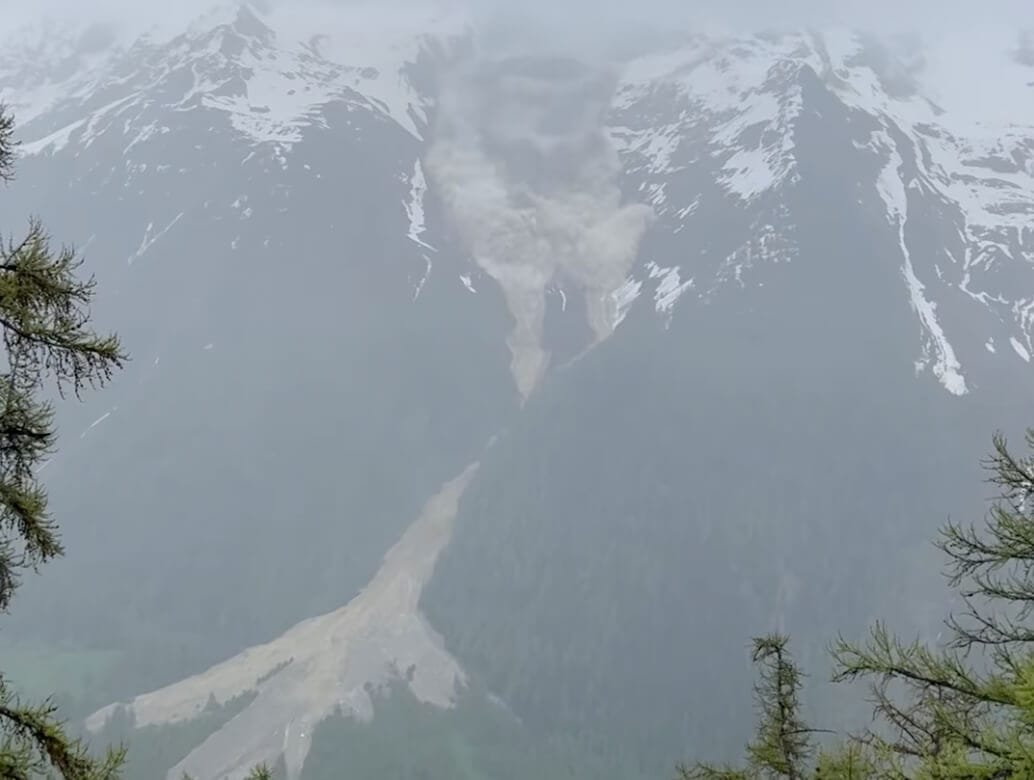
On Wednesday 28 May 2025, at around 3:30 pm, a large portion of the Birch Glacier, estimated at around 3 billion cubic metres, collapsed into the Lötschental valley destroying most of the village of Blatten. The landslide triggered a jolt equivalent to a 3.1 magnitude earthquake.

Click here to view a video of the landslide, filmed by Henzen Hans, a local resident who posted the video on Facebook. More videos and images can be viewed here on the SRF website.

But what caused the catastrophic landslide?

Hans Rudolf Keusen, a veteran Swiss geologist who has been studying the dramatic events unfolding above the village of Blatten told broadcaster SRF that a glacier collapse triggered by a massive rockfall from the Kleiner Nesthorn was the cause. The rockfall compressed the glacier, pushing it out of equilibrium, he said.

Such an event is unprecedented in Switzerland, said the expert. Historical landslides—such as those that destroyed Goldau or Elm—have buried villages before. But this combination of ice and rockfall, as seen in Blatten, is unprecedented.

Matthias Huss, a glaciologist at ETH Zurich agrees with Keusen. Heavy rock falling onto the glacier, combined with melting ice, set off a chain reaction.

Ice and water act as a lubricant, seeping between layers of debris. When intense pressure is applied, it becomes a highly mobile, destructive mass. The water saturated material formed a dense slurry that travelled far and buried everything in its path, said Huss.

Is climate change to blame? Huss was cautious. It is difficult to attribute this specific event directly to climate change, he said. However, the increasing frequency of high-altitude landslides in recent years—such as at Piz Cengalo and Piz Scerscen—suggests a broader trend.

The immediate concern now is flooding. The landslide has blocked the flow of the Lonza River and water is building up. Experts are concerned water could suddenly break through, triggering a flash flood.

By Friday afternoon, the water had started to cut a path through the debris, attenuating the build up. However, the situation remains tense.

A total of 365 village residents were evacuated. These people will need to remain outside the zone for the time being, said officials.

More on this:
SRF article (in German)

For more stories like this on Switzerland follow us on Facebook and Twitter.

Share. Facebook Twitter Pinterest LinkedIn Tumblr Email

Keep Reading

Federal government sets new rules on 30km/h zones

Federal Council opposes initiative to curb fossil-fuel funding

Swiss teachers’ unions say schools are ill-equipped for hot summers

Swiss home battery sales are booming. The maths still doesn’t add up

Swiss Liberal Greens want less polluting cigarette filters

Swiss public-transport fares to rise by less than expected

Backers of the safe food initiative accuse government of deception and demand a retraction

Fireworks ban exemptions prompt accusations of double standards

Swiss reservoirs at lowest level in two decades

Editors Picks

Switzerland is attracting fewer immigrants—and losing more of those already here

14 August 2026

Federal government sets new rules on 30km/h zones

14 August 2026

Rejection of wage protection measures risks Swiss-EU deal

14 August 2026

Federal Council opposes initiative to curb fossil-fuel funding

14 August 2026
Latest Posts

Switzerland is attracting fewer immigrants—and losing more of those already here

14 August 2026

Federal government sets new rules on 30km/h zones

14 August 2026

Rejection of wage protection measures risks Swiss-EU deal

14 August 2026
Facebook X (Twitter) Pinterest TikTok Instagram
© 2026 Switzerland Times. All Rights Reserved.
  • Privacy Policy
  • Terms
  • Advertise
  • Contact

Type above and press Enter to search. Press Esc to cancel.