
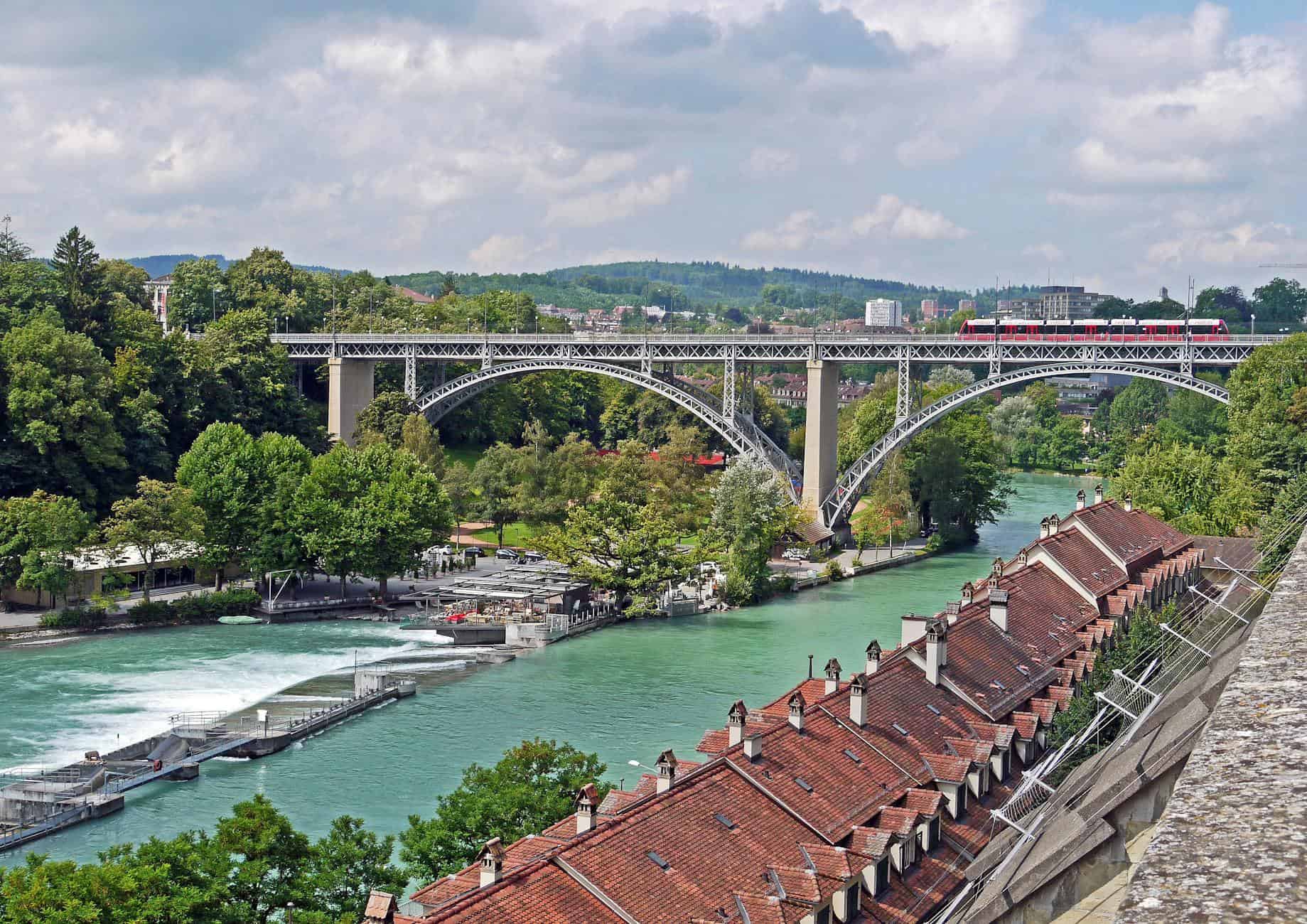
Climate change is warming not only the air, but rivers too. A study published by Nature warns that “riverine heatwaves”—prolonged periods of unusually high river temperatures—are becoming more frequent and intense across Alpine Europe. A temperature of 20 degrees Celsius in the Aare river at the end of May is record-breaking for this time of year.
The research, led by Amber van Hamel, Joren Janzing and Manuela Brunner of the WSL Institute for Snow and Avalanche Research and ETH Zurich, examined data from 275 Alpine catchments. It found that around half of atmospheric heatwaves translate into river heatwaves. Whether rivers overheat depends heavily on water flow and meltwater from snow and glaciers.
Cold meltwater acts as a natural buffer. During periods of high discharge, rivers are better able to resist spikes in air temperature. But when river flows are low—as increasingly happens during droughts and hot summers—the relationship between air and water temperatures strengthens sharply.
That is particularly worrying for Alpine regions. As glaciers retreat and snowpacks shrink, rivers are expected to lose an important source of cool water. The study concludes that many Alpine rivers will become increasingly vulnerable to extreme heat as climate change alters hydrological conditions.
The consequences extend beyond fish and freshwater ecosystems. Warmer rivers can disrupt hydropower production, reduce water quality and create problems for nuclear power stations that rely on river water for cooling—the Beznau nuclear power plant has already had to reduce its output because the cooling water from the Aare River was too warm to comply with legal limits. Some cold-water species, including trout and salmon, are especially sensitive to even modest increases in water temperature.
River heatwaves remain less studied than marine or atmospheric heatwaves, partly because long-term river-temperature records are scarce. Yet researchers increasingly see them as an emerging climate risk. One recent global assessment projected that persistent river heatwaves could become commonplace in many regions by the end of the century under high-emissions scenarios.
For decades Alpine rivers benefited from the cooling effects of snowmelt and glaciers. As those buffers disappear, Europe’s rivers may begin to feel heatwaves as much as humans already do.
More on this:
Nature publication (in English)
For more stories like this on Switzerland follow us on Facebook and Twitter.