
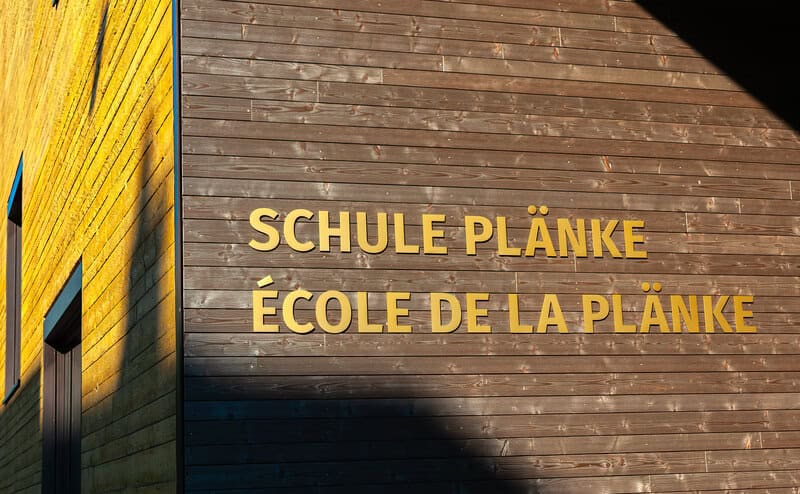
Switzerland has three main languages, and liguistic divides run through some cities such as Biel/Biennes and Freiburg/Fribourg. In Swiss cities in general, French is on the rise. In bilingual cities where some residents speak French at home and others German, French is gaining ground fast, according to data from the Federal Statistical Office (FSO). There are several reasons for this.
Switzerland is a trilingual nation, quadrilingual if the rarely spoken language of Romanche is included. However, many Swiss are monolingual, speaking only their mother tongue. In addition, many of those who are bilingual are likely to speak English alongside their mother tongue rather than another national language that they were probably forced to learn at school. This means speaking French in Zurich will not take you very far. And speaking German in Geneva will prove even less useful.
German and its dialects remain predominant in Switzerland. In 1920, 71% of the population spoke German, 21% spoke French, 6% spoke Italian and 2% spoke another language primarily. Roughly 100 years later, these same percentages were 63% (-8), 23% (+2), 8% (+2) and 6% (+4).
French is becoming slightly more predominant and useful across most of Switzerland’s cities, and especially so in its bilingual ones. Even in cities where a majority speak German, French speakers are on the rise. Zurich (+2.8 percentage points), Basel (+2.9), Bern (+3.3) and Zug (+3.4) have all seen rises in the percentage of people speaking primarily French over the last 20 years.
However, the biggest gainers of French speakers over the last two decades have been the bilingual cities of Freiburg/Fribourg (+4.5) and Biel/Biennes (+14.2). These are cities where native German- and French speakers coexist and both German and French are widely understood. Now, 71% of the residents of Fribourg speak French as do 43% of the residents of Biennes, up from 67% and 28% roughly 20 years ago.
So why is French growing in popularity?
The first reason is internal migration. German-speaking Switzerland has long economically outperformed French-speaking Switzerland. This has led to migration out of French-speaking cities to more prosperous German-speaking ones where jobs are more plentiful and unemployment rates are lower. And there has been less movement in the opposite direction. In addition, the high cost of French-speaking cities bordering Lake Geneva, has pushed people to move to more affordable cities like Biel and Freiburg, which offer a lower cost of living without the need to learn German.
Another reason is the liguistic make up of the migrants entering Switzerland. More migrants arrive speaking French than German. And learning French rather than German is much easier for large immigrant groups who speak other modern forms of Latin, such as Portugeuse, Spanish or Italian. And if these people land in a bilingual city they will typically choose to learn French over German.
Those hoping to fully integrate in German-speaking cities will also eventually need to tune their ears and tongues to the local Swiss-German dialect, a feature of Swiss French that has largely been lost to history. While this loss of linguistic culture pains some Swiss French speakers it certainly makes life easier for new comers.
More on this:
FSO article (in French) – Take a 5 minute French test now
For more stories like this on Switzerland follow us on Facebook and Twitter.