
Close Menu
  • Home
  • Politics
  • Business & Economy
  • Education
  • Environment
  • Immigration
  • Technology
  • Automotive
  • Things To Do
  • More
    • Web Stories
    • Global
    • Press Release
What's On

Switzerland’s gender pay gap shrinks to its lowest ever

5 September 2026

Zurich parliament backs headscarf ban in public schools

4 September 2026

Swiss shift strongly in favour of air conditioning

4 September 2026

Swiss government unlocks 70m to help farmers and forest owners with drought damage

28 August 2026

Swiss court rules citizenship can be revoked despite statelessness risk

27 August 2026
Facebook X (Twitter) Instagram
Web Stories
Switzerland Times
  • Home
  • Politics
  • Business & Economy
  • Education
  • Environment
  • Immigration
  • Technology
  • Automotive
  • Things To Do
  • More
    • Web Stories
    • Global
    • Press Release
Home » Switzerland’s housing squeeze tightens as vacancy rate hits 1%
Immigration

Switzerland’s housing squeeze tightens as vacancy rate hits 1%

By switzerlandtimes.ch12 September 20252 Mins Read
Switzerland’s housing squeeze tightens as vacancy rate hits 1%
Share
Facebook Twitter LinkedIn Pinterest Email

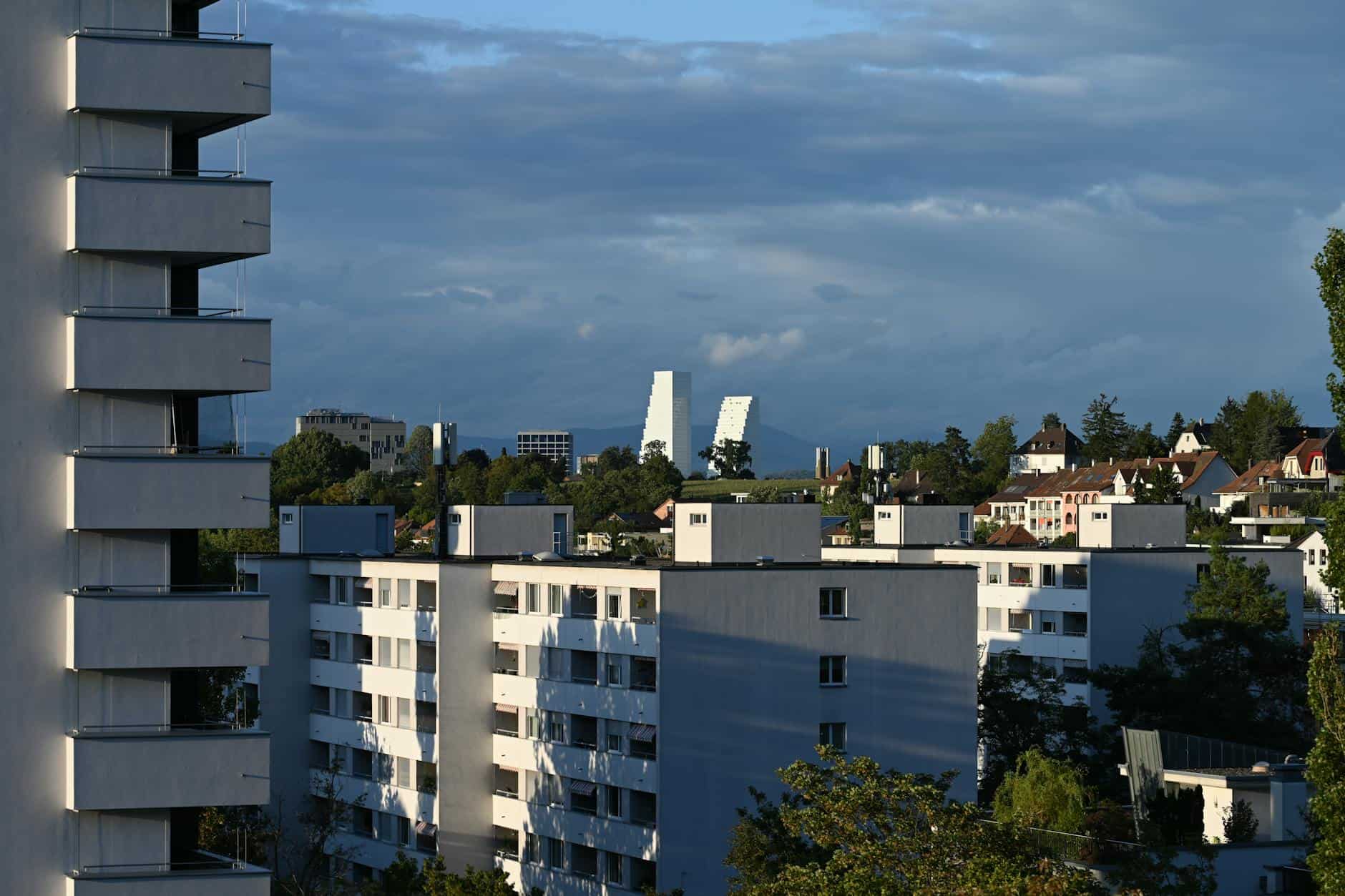
Finding a home in Switzerland is getting harder. For the fifth year in a row the share of vacant flats has fallen, slipping to 1%. In other words, 99% of the country’s housing stock is now occupied. The broad region with the most acute crunch is Vaud and Geneva, but shortages are country wide.

According to the Federal Statistical Office (FSO), the vacancy rate dropped by 0.08 percentage points in the year to June 1st 2025, from 1.08% to 1%. That leaves just over 48,000 homes empty nationwide—around 3,600 fewer than a year earlier. It marks the fifth consecutive annual decline.

The steepest fall came in Ticino, where the share of available housing, whether for rent or for sale, fell from 2.08% to 1.92%. The Lake Geneva region followed, with a decline from 0.96% to 0.83%.

Scarcity is no longer confined to city centres. In Vaud, many house-hunters are moving further afield, to places like the Veveyse district of neighbouring Fribourg. Châtel-Saint-Denis, a designated “pole city” in Switzerland’s planning jargon, is under particular strain. New developments are snapped up before the paint dries. Towns like this are now expected to absorb new residents in a way that smaller surrounding communes are not.

By convention, a vacancy rate below 2% signals shortage. All of French-speaking Switzerland now qualifies, bar Jura. Geneva is worst off, with a vacancy rate of just 0.34%, followed by Vaud (0.89%), Fribourg (1.11%), Valais (1.18%) and Neuchâtel (1.82%). Jura, with 3.03%, and Solothurn, with 2.05%, are the only cantons in Switzerland above the shortage threshold.

Nationally, Geneva remains the tightest market, followed by Zug (0.42%) and Zurich (0.48%). Basel-City (0.92%) is a little better. In total, 15 cantons now register vacancy rates below 1%, evidence of a nationwide squeeze. Families are bearing the brunt, since three- and four-room apartments are most in demand.

Many more rural cantons are feeling the squeeze too. Vacancy rates in Nidwalden (0.68%), Uri (0.64%), Glarus (0.61%), Graubunden (0.57%) and Obwalden (0.50%) are all well below 1%.

Net migration to Switzerland was around 142,000 in 2023, a number that fell to 83,000 in 2024 as the number of Ukrainian refugees fell. Set against the 48,000 available homes in June, Switzerland’s housing situation looks dire.

More on this:
FSO communiqué (in French) – Take a 5 minute French test now

For more stories like this on Switzerland follow us on Facebook and Twitter.

Share. Facebook Twitter Pinterest LinkedIn Tumblr Email

Keep Reading

Zurich parliament backs headscarf ban in public schools

Swiss court rules citizenship can be revoked despite statelessness risk

Swiss government committee calls for an immigration tax on EU workers

Switzerland is attracting fewer immigrants—and losing more of those already here

Swiss rail – squeezing more people onto ever busier trains

Childlessness and smaller families driving down fertility in Switzerland

Swiss canton to ban headscarfs in schools

New EU rules on offshore migrant-return centres will apply to Switzerland

Knife attack suspect active in the Islamic extremist scene in Winterthur

Editors Picks

Switzerland’s gender pay gap shrinks to its lowest ever

5 September 2026

Zurich parliament backs headscarf ban in public schools

4 September 2026

Swiss shift strongly in favour of air conditioning

4 September 2026

Swiss government unlocks 70m to help farmers and forest owners with drought damage

28 August 2026
Latest Posts

Switzerland’s gender pay gap shrinks to its lowest ever

5 September 2026

Zurich parliament backs headscarf ban in public schools

4 September 2026

Swiss shift strongly in favour of air conditioning

4 September 2026
Facebook X (Twitter) Pinterest TikTok Instagram
© 2026 Switzerland Times. All Rights Reserved.
  • Privacy Policy
  • Terms
  • Advertise
  • Contact

Type above and press Enter to search. Press Esc to cancel.